
What Is The Best Laser For Hair Removal Treatments In 2025?
- Lana Skyn

- Jul 7, 2024
- 7 min read
Updated: Aug 31, 2025
Dealing with unwanted hair can be frustrating, whether it’s on your face, underarms, or bikini line. With so many hair removal options available, choosing the best treatment for your skin type and hair color can be overwhelming. If you're wondering, "What’s the best laser for hair removal in 2025?", you’re not alone.
In 2025, diode lasers stand out as a top choice for precise and effective hair removal. They are highly effective at targeting hair follicles with minimal discomfort, making them a popular option for a wide range of skin tones and hair types. Other options include Alexandrite lasers, ideal for lighter skin, and Nd:YAG lasers, which are safer for darker skin tones. IPL (Intense Pulsed Light) is another option, often used for larger areas.
Keep reading to explore these cutting-edge hair removal technologies and find out which one works best for you in 2025.
Types of Lasers Used in Hair Removal Treatment
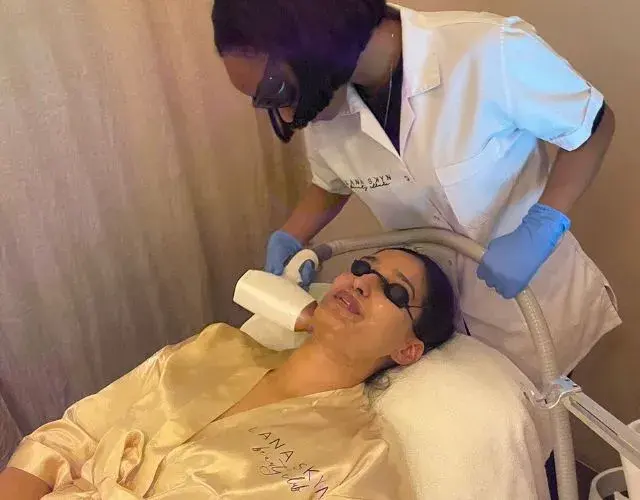
In 2025, advancements in technology have led to a variety of lasers being used in hair removal treatments. Understanding these different types is crucial to getting the best hair removal in Amsterdam and ensuring optimal results. Here are their varieties:
1. Diode Laser
If you're seeking an effective, comfortable, and versatile hair removal treatment, the diode laser is an excellent option to consider. It’s one of the most popular laser technologies widely used in dermatology clinics and medical spas for long-term hair reduction.
Diode lasers are known for their ability to treat a wide range of skin tones (Fitzpatrick types I-V) and hair types, offering a solution for light to dark skin tones and fine to coarse hair. This makes it an ideal choice for individuals looking for customized hair removal that’s effective yet gentle.
How Does the Diode Laser Work?
A diode laser works by emitting a specific wavelength of light (usually around 800-810 nm) that is absorbed by the melanin in your hair follicles. The absorbed light is converted into heat, which damages the hair follicle and inhibits future hair growth.
This selective targeting of melanin allows diode lasers to work on various skin types, from fair skin to medium-dark skin tones, without causing damage to the surrounding tissue. Minimal discomfort is experienced during the procedure due to the cooling mechanisms integrated into most diode systems.
As the treatment progresses, treated hair gradually sheds, leading to a noticeable reduction in hair growth after each session. Over time and multiple sessions, you’ll experience long-lasting hair removal results.
2. Alexandrite Laser
When considering laser hair removal treatments, the Alexandrite Laser is often hailed as one of the most effective and efficient options available. It’s widely used in dermatology clinics and medical spas for its precision and fast treatment times, making it a go-to choice for many seeking long-term hair reduction.
Alexandrite lasers are especially popular for lighter skin tones (Fitzpatrick skin types I-III), thanks to their ability to target melanin in the hair follicles with high precision and minimal discomfort. Many patients experience only slight sensations during treatment, describing it as tolerable or similar to the feeling of a rubber band snap.
How Does the Alexandrite Laser Work?
The Alexandrite Laser uses a wavelength of 755 nanometers, which is highly effective at targeting melanin in the hair follicle. The light is absorbed by the melanin, which converts the light into heat, effectively damaging the follicle and stopping future hair growth.
This process, known as selective photothermolysis, ensures minimal damage to the surrounding skin while disrupting the hair follicle’s ability to regenerate hair. Alexandrite lasers offer one of the most efficient ways to achieve long-term hair reduction with precise targeting and fast treatment times.
During treatment, the Alexandrite laser is carefully directed over the skin, where it emits controlled bursts of light that progressively damage the follicles. Over multiple sessions, this damage leads to significant hair reduction, with long-lasting results.
3. Nd: YAG Laser
If you have darker skin tones (Fitzpatrick skin types IV-VI) and are considering laser hair removal, the Nd:YAG laser might be the ideal choice. This advanced laser is recognized for its superior safety profile, especially when compared to other lasers that can lead to hyperpigmentation or skin discoloration on darker skin tones.
Thanks to its longer wavelength, the Nd:YAG laser minimizes the risk of side effects, making it one of the most safe and effective options for people with darker skin. It's particularly useful for treating thicker, coarser hair and can handle even the most stubborn hair growth. This makes it a great option for areas such as legs, underarms, and bikini lines, where the hair tends to be denser.
How Does the Nd:YAG Laser Work?
The Nd:YAG laser operates with a 1064-nanometer wavelength, which is highly effective at targeting the melanin in hair follicles. This specific wavelength allows the laser to penetrate deeper into the skin, making it safer for darker skin tones, while also targeting the hair follicle with precision.
When the laser light is absorbed by the melanin, it is converted into heat energy. This heat is concentrated directly within the hair follicle, where it disrupts and damages the follicle’s ability to grow new hair.
This powerful thermal disruption effectively inhibits future hair growth, leading to a noticeable reduction in hair density after multiple sessions. While Nd:YAG lasers may require fewer sessions than other treatments for individuals with darker skin, they offer long-lasting and effective results in the treatment of coarse hair.
4. Intense Pulsed Light (IPL)
If you have lighter skin tones (Fitzpatrick skin types I-III) and are looking for an alternative to traditional laser hair removal, Intense Pulsed Light (IPL) technology may be worth considering. While not a true laser, IPL uses a broader spectrum of light pulses that can effectively target unwanted hair, providing a gentler approach, especially for individuals with sensitive skin who may be more prone to irritation from laser treatments.
One of the key advantages of IPL is its ability to treat larger areas, such as the back, chest, and legs, much more quickly than traditional laser hair removal systems. The larger treatment spot sizes make IPL an efficient option for those seeking to treat significant areas of the body in a shorter time frame.
How Does IPL Work?
Unlike laser hair removal, which uses a single concentrated beam of light, IPL emits a range of wavelengths in one pulse. This makes it less precise but allows it to treat larger areas. The light pulses target melanin, the pigment that gives hair its color.
As the melanin absorbs the light, it transforms the energy into heat. This concentrated heat within the hair follicle disrupts the bulge and papilla—key structures that are essential for hair growth. By damaging these structures, IPL effectively reduces hair growth and prevents the follicle from producing new hair.
While IPL is less precise than traditional laser hair removal, it can still be a viable option for those with lighter skin tones seeking cost-effective, non-invasive hair removal for larger areas of the body. However, multiple sessions are typically required for the best results, and IPL may not be as effective for darker skin tones or lighter hair.
5. Ruby Laser Hair Removal
Though less commonly used today, the Ruby Laser was one of the first advancements in laser technology for hair removal. Historically, it was a pioneer, laying the groundwork for newer, more effective technologies.
The Ruby Laser emits light at a wavelength of 694 nanometers, which is specifically absorbed by the melanin pigment within the hair follicles. The absorbed light is converted into heat, which causes thermal damage to the hair follicles, effectively disabling their ability to produce new hair growth.
While Ruby Laser systems are less popular now, they remain an option for individuals with light skin tones and dark hair, as they are most effective when there is a high contrast between the hair and skin.
How Does the Ruby Laser Work?
The Ruby Laser targets melanin, the pigment that gives hair its color. The 694 nm wavelength is absorbed by the melanin in the hair follicle, leading to thermal destruction of the follicle. As a result, the hair follicle is damaged, hindering its ability to grow new hair.
One of the advantages of Ruby Laser technology is its built-in cooling system, designed to minimize discomfort during treatment. The cooling system continuously cools the skin, making the treatment more tolerable than some other laser options. Additionally, the time between laser pulses allows the skin to dissipate heat, further reducing pain and discomfort during the session.
Factors to Consider When Choosing A Laser For Your Hair Removal

When considering lasers for hair removal, choosing the right type is crucial for achieving safe, effective, and satisfactory results. Here are some factors you can keep in mind:
1. Skin Tone & Hair Types:
Different lasers are optimized for specific skin and hair types. For instance, individuals with light skin and dark hair typically respond well to lasers that target melanin, such as Alexandrite or Diode lasers.
On the other hand, those with darker skin tones may require lasers that are less likely to cause pigmentation changes, such as Nd:YAG lasers.
2. Desired Results and Pain Tolerance:
Must evaluate how long-lasting and permanent you want the results to be. Some lasers offer more permanent hair reduction, while others might require more frequent touch-up sessions
Additionally, different lasers vary in terms of comfort levels. Some utilize cooling mechanisms to minimize discomfort during treatment.
3. Cost and Treatment Time:
Laser hair removal is an investment, and costs can vary depending on the chosen laser, treatment area, and number of sessions required. Additionally, some lasers can treat larger areas faster, impacting the overall treatment time.
4. Expertise of the Practitioner:
Always seek a qualified professional laser therapist in Amsterdam with experience in the specific laser technology you're considering. Their expertise is vital in selecting the right laser type based on your skin tone, hair color, and treatment goals. A skilled therapist will ensure safe, effective results, guiding you toward the best option for your personal requirements and making your laser hair removal journey as smooth as possible.
In Closing!
The best laser for hair removal depends on factors like skin type, hair color, and personal preferences. Diode lasers, Alexandrite lasers, and Nd:YAG lasers each offer unique benefits tailored to different needs. For lighter skin and dark hair, Alexandrite lasers work best, while Nd:YAG lasers are ideal for darker skin tones. Diode lasers are versatile for various skin types.
Consulting a dermatologist or laser hair removal specialist is essential to determine the safest and most effective laser for your skin and hair profile. Their expertise ensures you get long-lasting results with minimal risk of side effects like hyperpigmentation or skin irritation.


Comments